
“When the music and dance create with accord…their magic captivates both the heart and the mind.” – Jean-Georges Noverre
Music inspires movement. Movement by oneself is free, seemingly without bounds. But movement, aka dance, involving a pair requires coordination – leading, following, advancing, retreating, planning for success, and planning for recovery.
Relationships are like dances, swelling and fading, forming life’s soundtrack. Like an expertly choreographed dance team wherein one member’s success hinges on the movements of another, the quality of our relationships is determined by the intentionality with which we lead, follow, advance, retreat, plan for success, and recovery plan.
Neither music nor dance is happenstance, despite emerging freestyle forms. There are underlying principles that, when violated, create chaos rather than harmony. Relationships follow similar guidelines.
Conflict in relationships arises when the dance steps of one person change from the anticipated routine. The music scratches to a halt and the partners stumble. In this way, relationships diverge from orchestrated musical pieces. They are rife with unexpected changes in tempo and key.
Knowing this, we must prepare ourselves to expect the unexpected. How do we do this? Read More

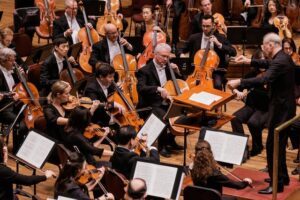 Imagine if you arrived at the Kennedy Center to hear the NSO perform Beethoven’s No. 5 symphony, but to your surprise, only the violin section appeared on stage with all other instruments and their accompanying maestros completely absent. Imagine that you pulled up one of your favorite songs, “More Than Words” by Extreme, hit play, and heard only one member of the band singing, while the other with his masterful harmonies was suddenly gone. Or imagine singing “Row, Row, Row Your Boat” rounds alone.
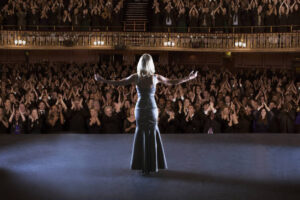 How about your own performance? Consider that recital, audition, presentation, or interview you’ve got coming up. Where’s your focus? What someone will think about you after it’s over?
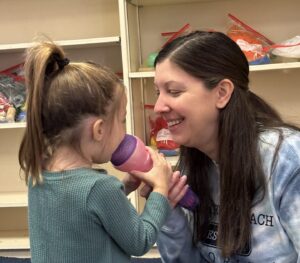 For small children and their caregivers, attending a music class together can create bonds between them as well as provide connections with other families in the community. Children are inherently musical and will love sharing this experience with a parent or grandparent. As the children learn a variety of age-appropriate skills (gross & fine motor skills, impulse control, coordination, etc.) the caregivers learn to respond to their children and support them as they learn new skills.
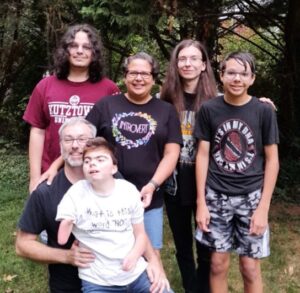 Please share a bit about yourself and your background: Are you a Chambersburg native? What is your role in our community (now or previously if retired)? Were/are you a musician?
 When did you attend CVSM and who were your teachers?
 For how long have you attended CVSM and which teachers have you studied with?

Recent Comments